Length of rainy season

Length of rainy season by District

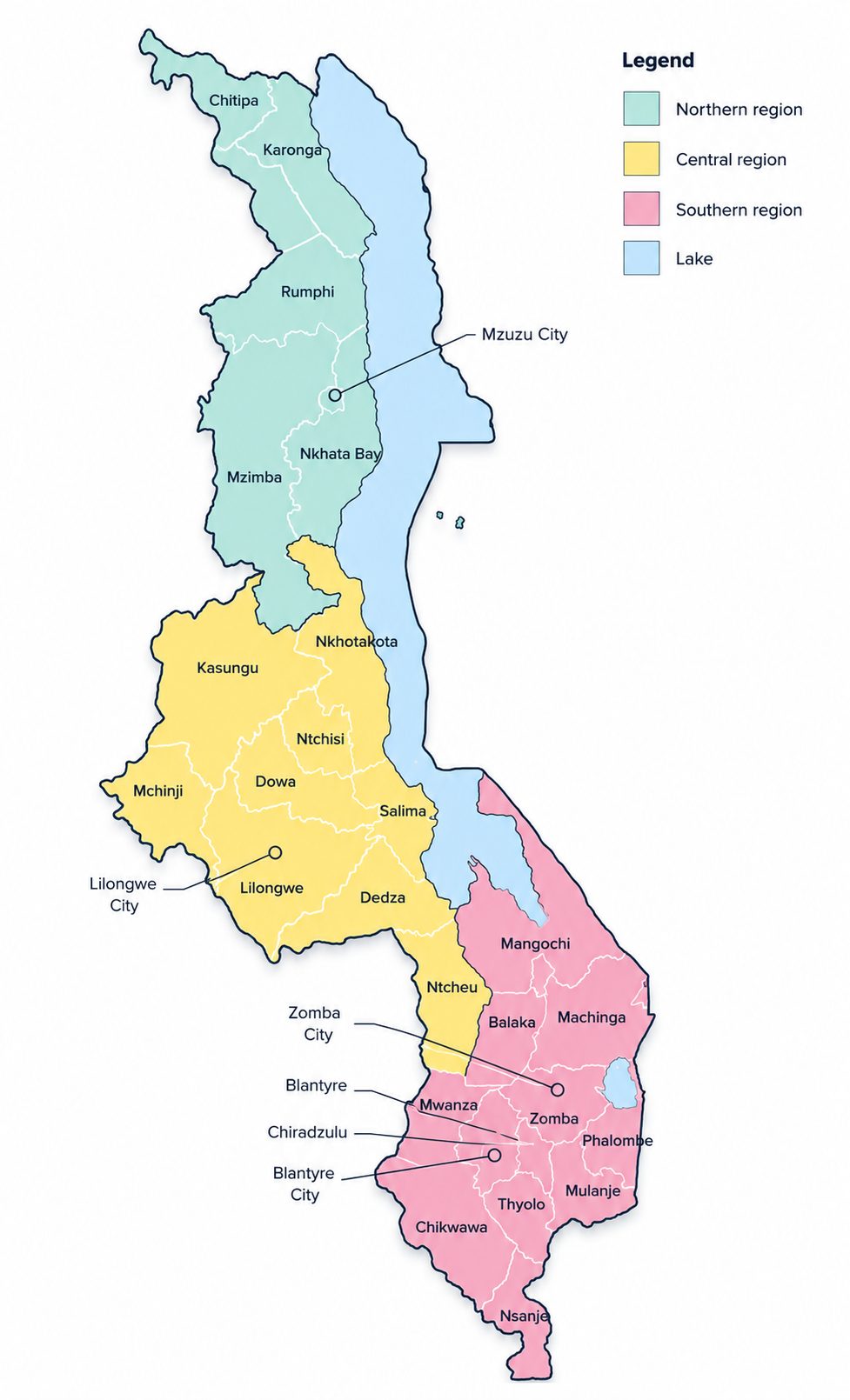
Climate challenges vary by location. Explore region-specific adaptation strategies tailored to local environmental, economic, and social contexts to build resilience effectively.

Region Chikwawa

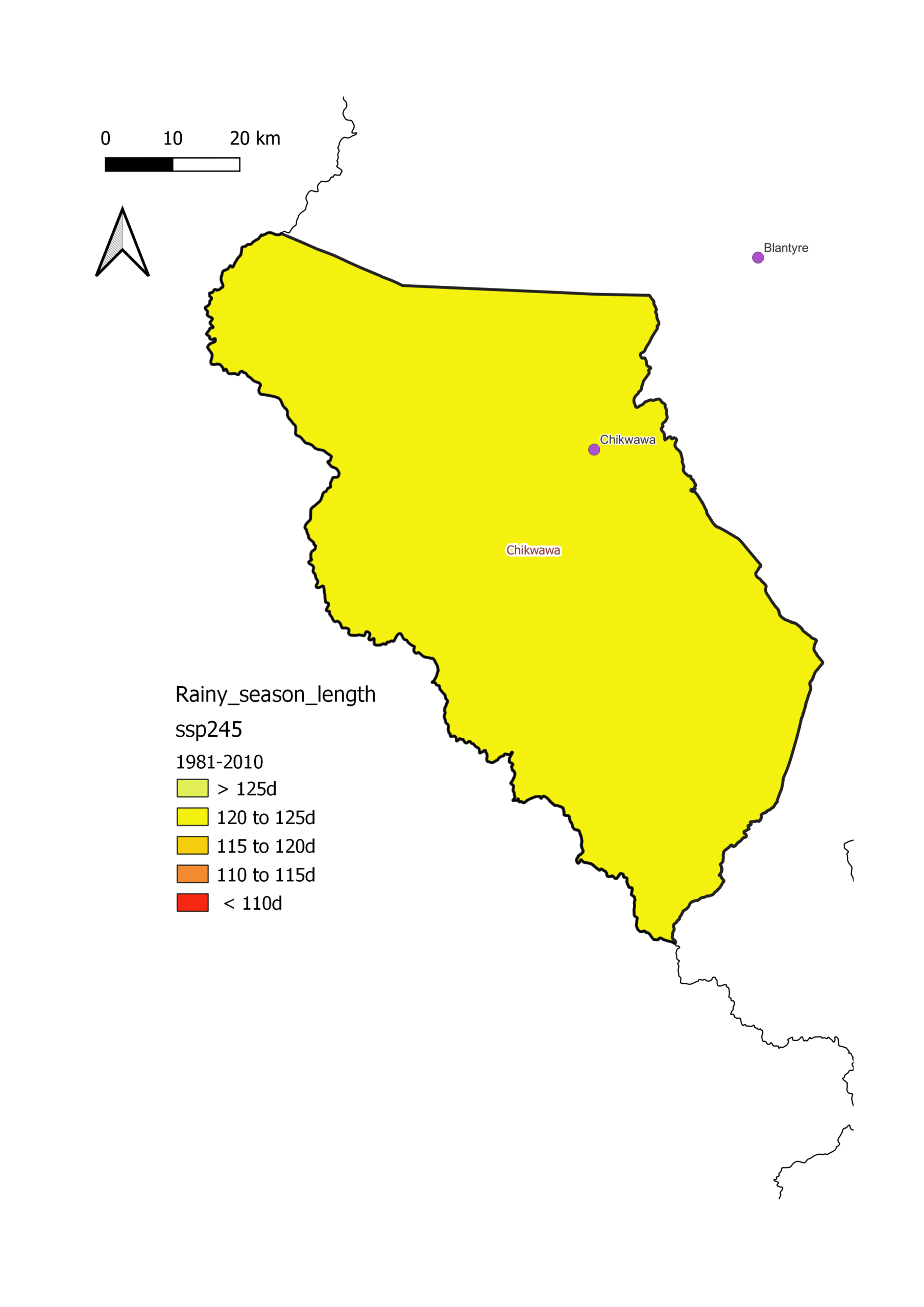
Figure 1. Duration of the rainy season recorded during the historical baseline years (1981-2010).
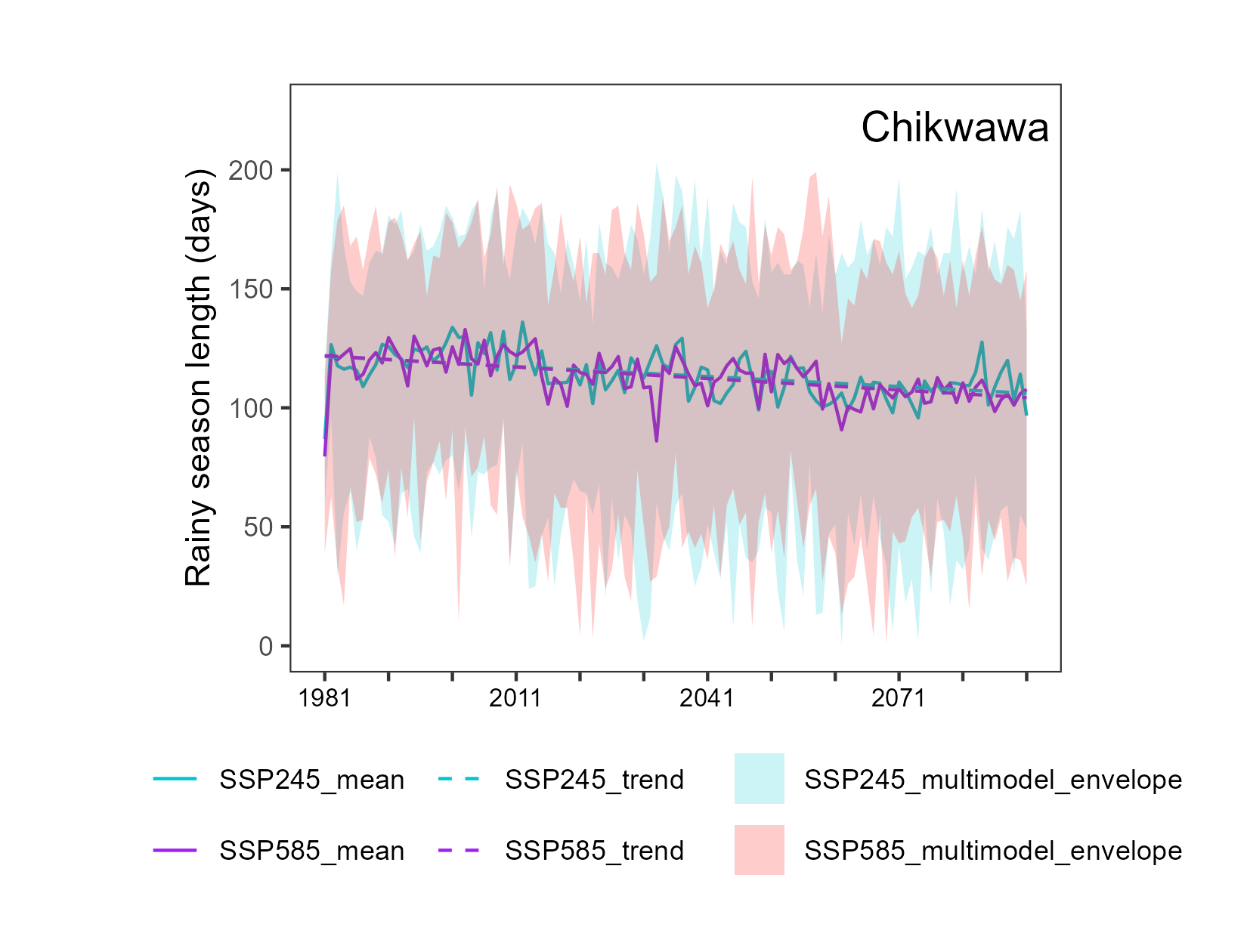
Duration of the rainy season for both SSP2-4.5(green) and SSP5-8.5 (purple). The dashed lines are the linear trends of the ensemble means for SSP members.
Figure 2. Duration of the rainy season for both SSP2-4.5(green) and SSP5-8.5 (purple). The dashed lines are the linear trends of the ensemble means for SSP members. 
Chikwawa District has experienced a long rainy season from the 1980s to the present, with an average of around 108 rainy days per year. However, projections indicate that the duration of the rainy season will decrease by the end of the 21st century under both scenarios. The table below summarises the projected length of the rainy season by the 2080s, based on two Shared Socioeconomic Pathways (SSPs): SSP2-4.5 and SSP5-8.5.  


Note: Tables represent ensemble means from climate model projections. Actual values vary across models, and results should be interpreted as approximate rather than exact 
Current average duration of rainy season per year (1981-2010): 108 days
Business as usual (SSP2-4.5)Average duration of rainy season per year is projected to reach:
Around 117 days by 2040
Around 101 days by 2060
Around 110 days by 2080
Tech- and fossil-fuelled boom (SSP5-8.5)Average duration of rainy season per year is projected to reach:
Around 110 days by 2040
Around 110 days by 2060
Around 102 days by 2080

Region Dedza

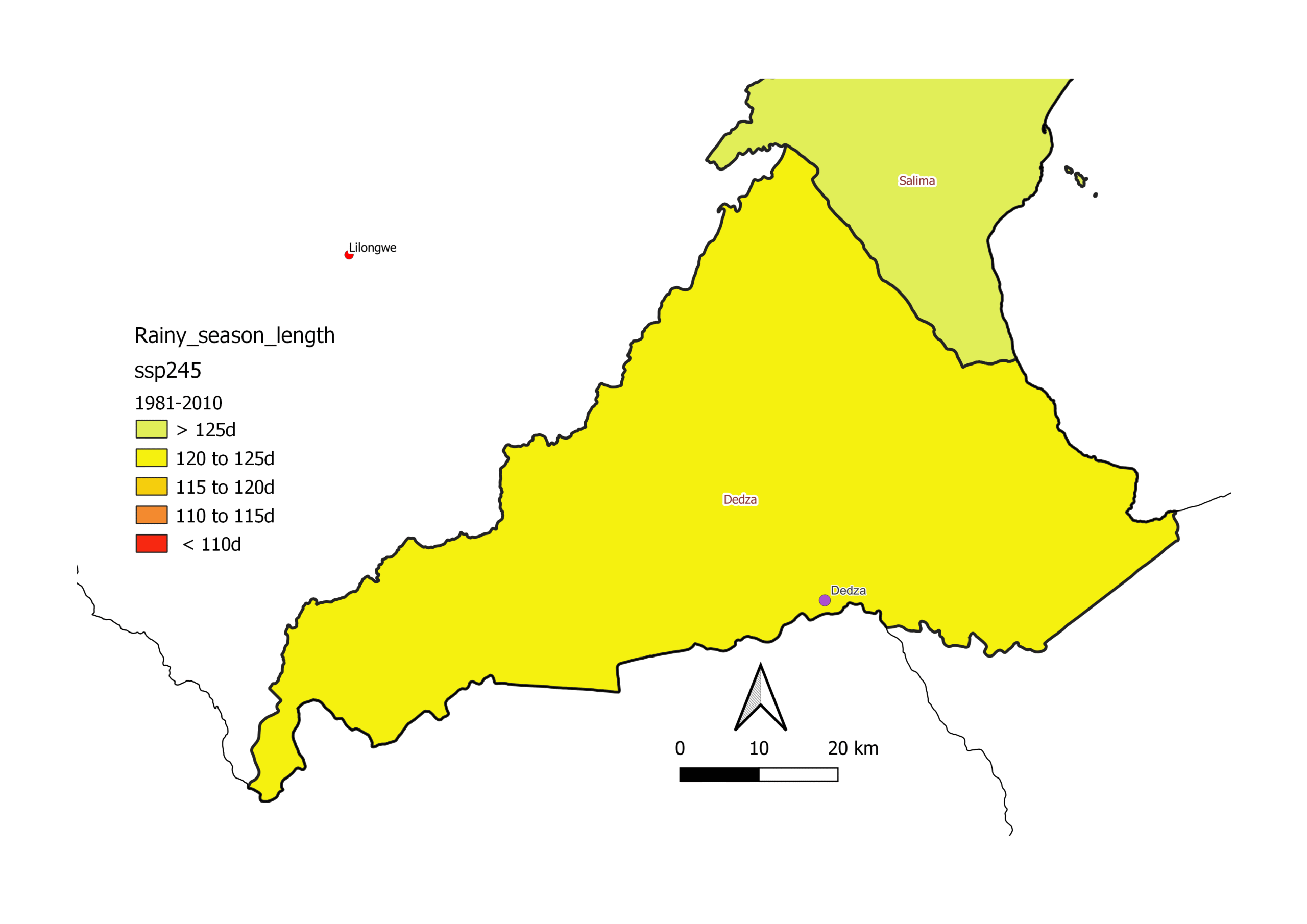
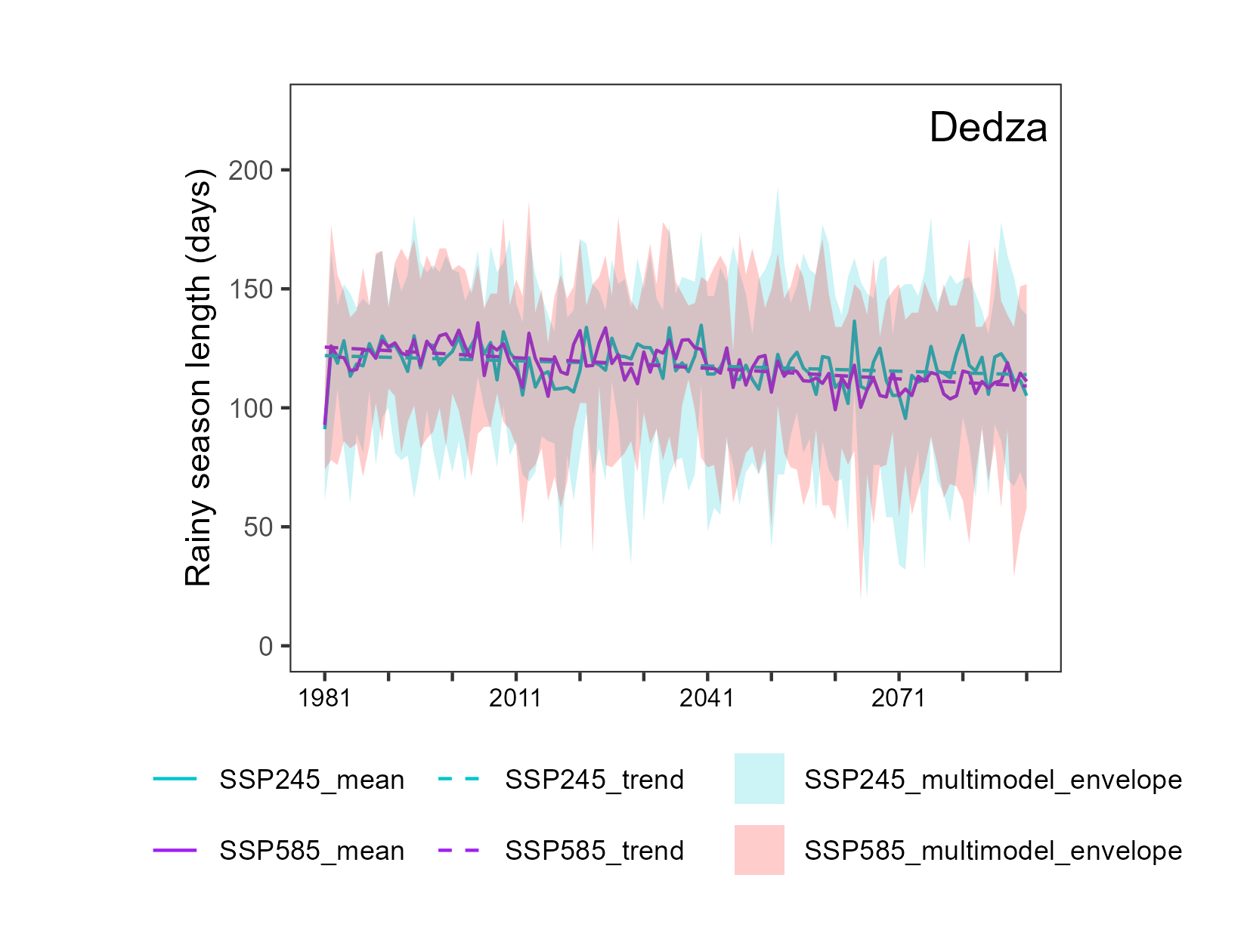
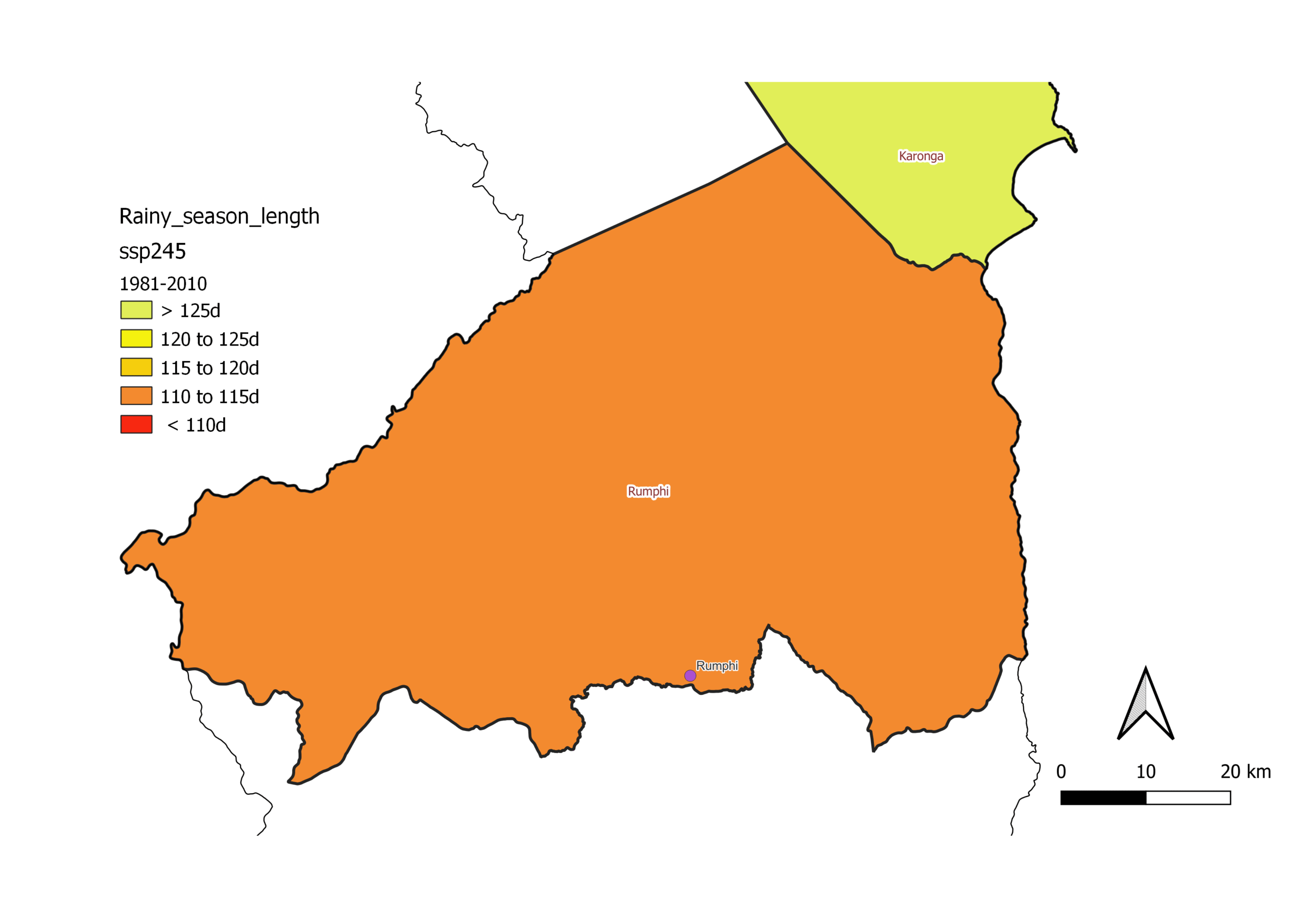
Figure 1. Duration of the rainy season recorded during the historical baseline years (1981-2010).
Duration of the rainy season for both SSP2-4.5(green) and SSP5-8.5(purple). The dashed lines are the linear trends of the ensemble means for SSP members.
Figure 2. Duration of the rainy season for both SSP2-4.5(green) and SSP5-8.5(purple). The dashed lines are the linear trends of the ensemble means for SSP members.
Dedza District has experienced a long rainy season from the 1990s to the present, with an average of around 116 rainy days per year. However, projections indicate that the duration of the rainy season will decrease by the end of the 21st century under both scenarios. The table below summarises the projected length of the rainy season by the 2080s, based on two Shared Socioeconomic Pathways (SSPs): SSP2-4.5 and SSP5-8.5. 

Note: Tables represent ensemble means from climate model projections. Actual values vary across models, and results should be interpreted as approximate rather than exact 
Current average length of rainy season per year (1981-2010):116 days
Business as usual (SSP2-4.5)Average length of rainy season per year is projected to reach:
Around 135 days by 2040
Around 121 days by 2060
Around 123 days by 2080
Tech- and fossil-fuelled boom (SSP5-8.5)Average length of rainy season per year is projected to reach:
Around 125 days by 2040
Around 114 days by 2060
Around 105 days by 2080

Region Rumphi

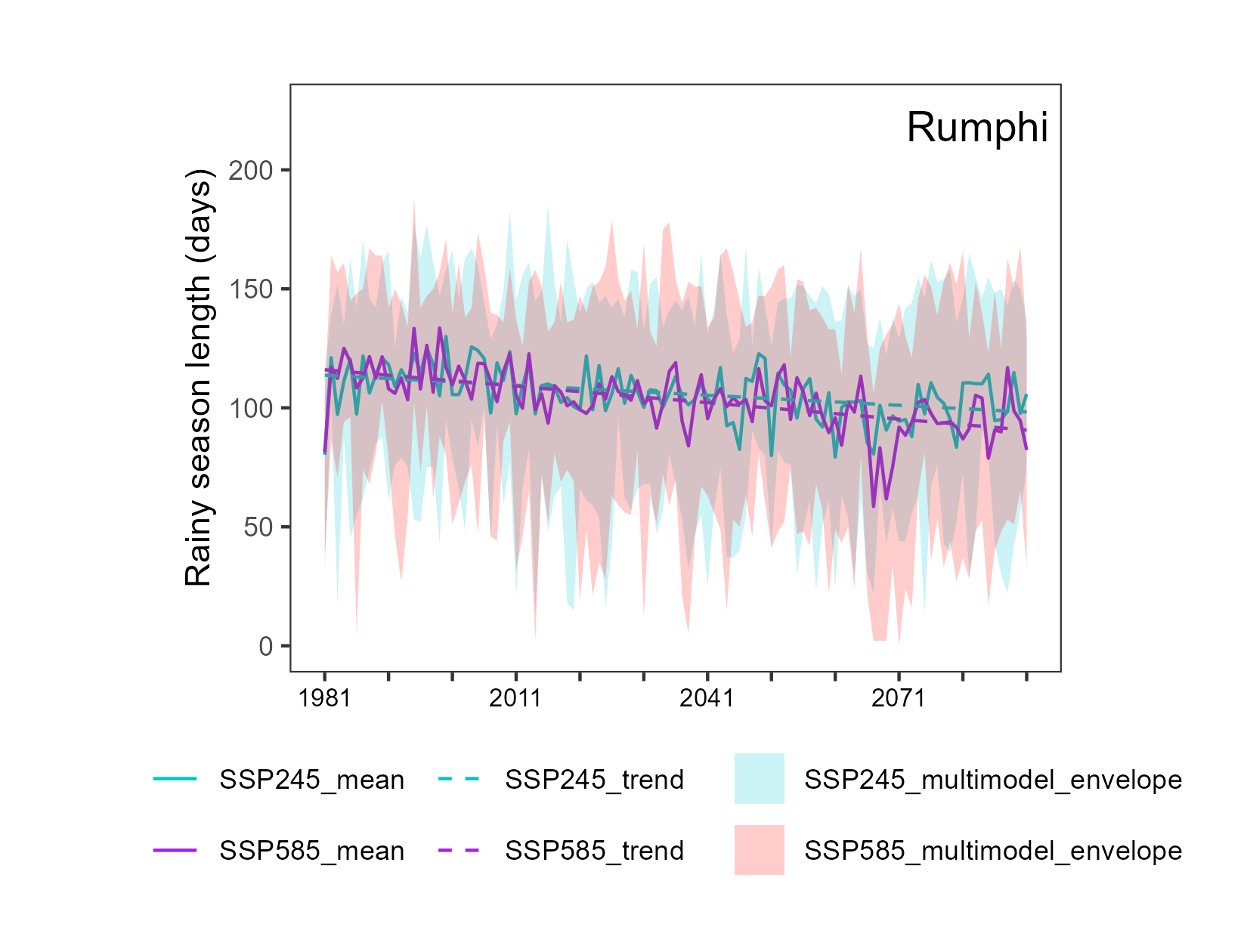
Figure 1. Duration of the rainy season recorded during the historical baseline years (1981-2010).
Duration of the rainy season for both SSP2-4.5(green) and SSP5-8.5(purple). The dashed lines are the linear trends of the ensemble means for SSP members.
Figure 2. Duration of the rainy season for both SSP2-4.5(green) and SSP5-8.5(purple). The dashed lines are the linear trends of the ensemble means for SSP members. 
Rumphi District has experienced a short rainy season from the 1980s to the present, with an average of around 99 rainy days per year. However, projections indicate that the duration of the rainy season will decrease by the end of the 21st century under both scenarios. The table below summarises the projected length of the rainy season by the 2080s, based on two Shared Socioeconomic Pathways (SSPs): SSP2-4.5 and SSP5-8.5. 


Note: Tables represent ensemble means from climate model projections. Actual values vary across models, and results should be interpreted as approximate rather than exact 
Current average length of rainy season per year (1981-2010): 99 days
Business as usual (SSP2-4.5)Average length of rainy season per year is projected to reach:
Around 111 days by 2040
Around 106 days by 2060
Around 83 days by 2080
Tech- and fossil-fuelled boom (SSP5-8.5)Average length of rainy season per year is projected to reach:
Around 114 days by 2040
Around 90 days by 2060
Around 92 days by 2080

Region Phalombe

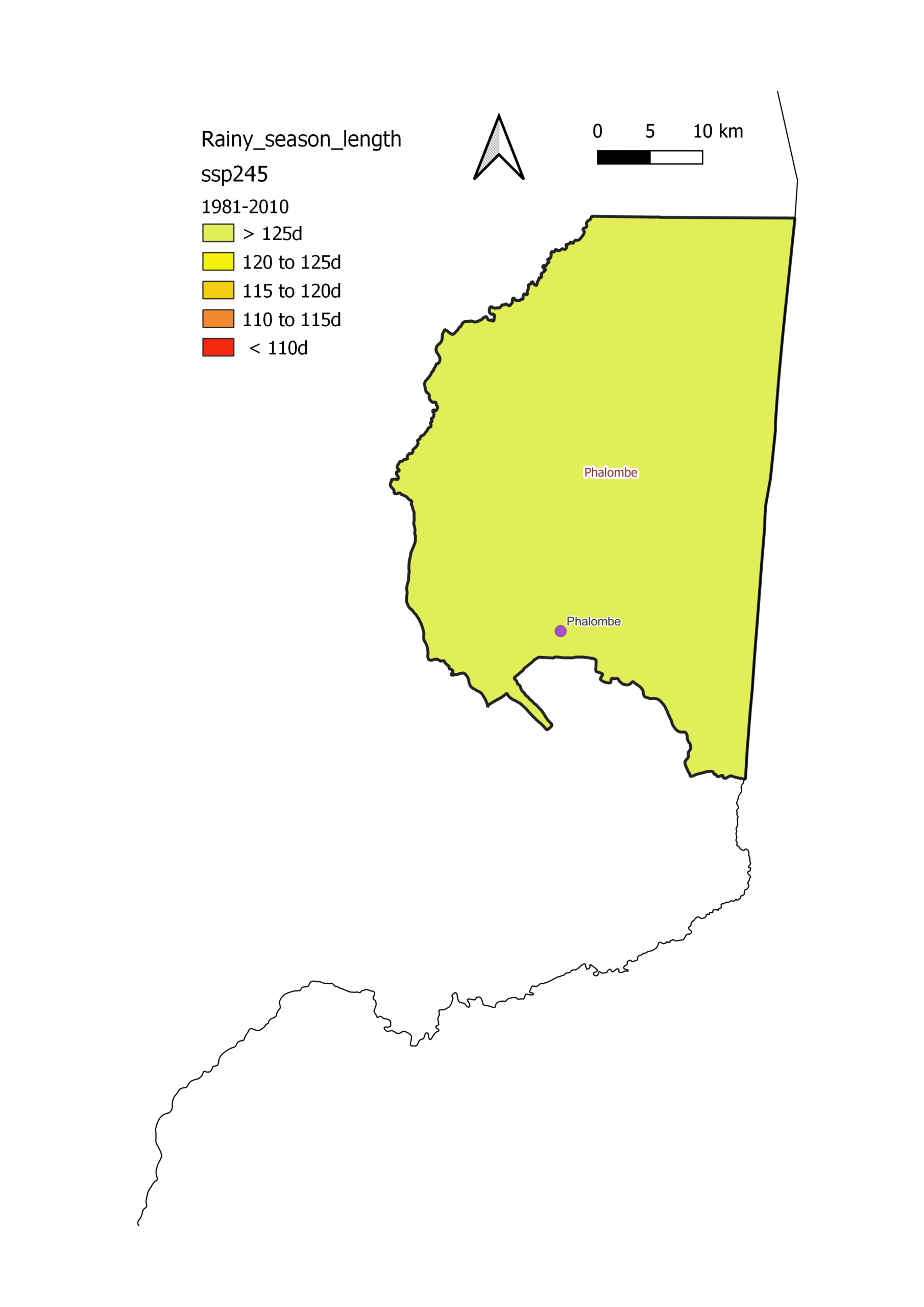
Figure 1. Duration of the rainy season recorded during the historical baseline years (1981-2010).
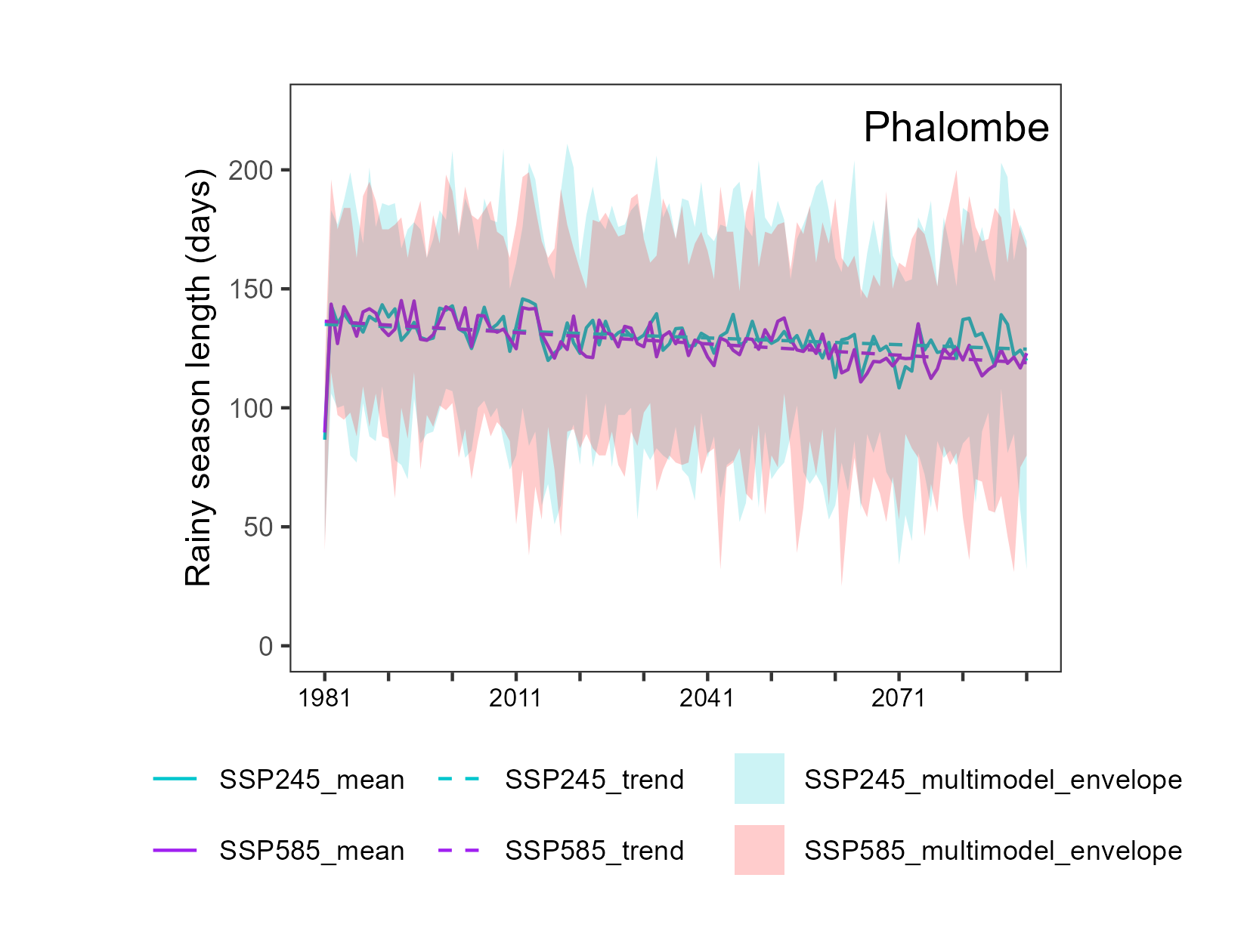
Duration of the rainy season for both SSP2-4.5(green) and SSP5-8.5(purple). The dashed lines are the linear trends of the ensemble means for SSP members.
Figure 2. Duration of the rainy season for both SSP2-4.5(green) and SSP5-8.5(purple). The dashed lines are the linear trends of the ensemble means for SSP members.
Phalombe District has experienced a very long rainy season from the 1980s to the present, with an average of around 136 rainy days per year. However, projections indicate that the duration of the rainy season will decrease by the end of the 21st century under both scenarios. The table below summarises the projected length of the rainy season by the 2080s, based on two Shared Socioeconomic Pathways (SSPs): SSP2-4.5 and SSP5-8.5.  


Note: Tables represent ensemble means from climate model projections. Actual values vary across models, and results should be interpreted as approximate rather than exact. 
Current average length of rainy season per year (1981-2010): 136 days
Business as usual (SSP2-4.5)Average duration of rainy season per year is projected to reach:
Around 131 days by 2040
Around 128 days by 2060
Around 121 days by 2080
Tech- and fossil-fuelled boom (SSP5-8.5)Average duration of rainy season per year is projected to reach:
Around 127 days by 2040
Around 121 days by 2060
Around 125 days by 2080

Region Karonga

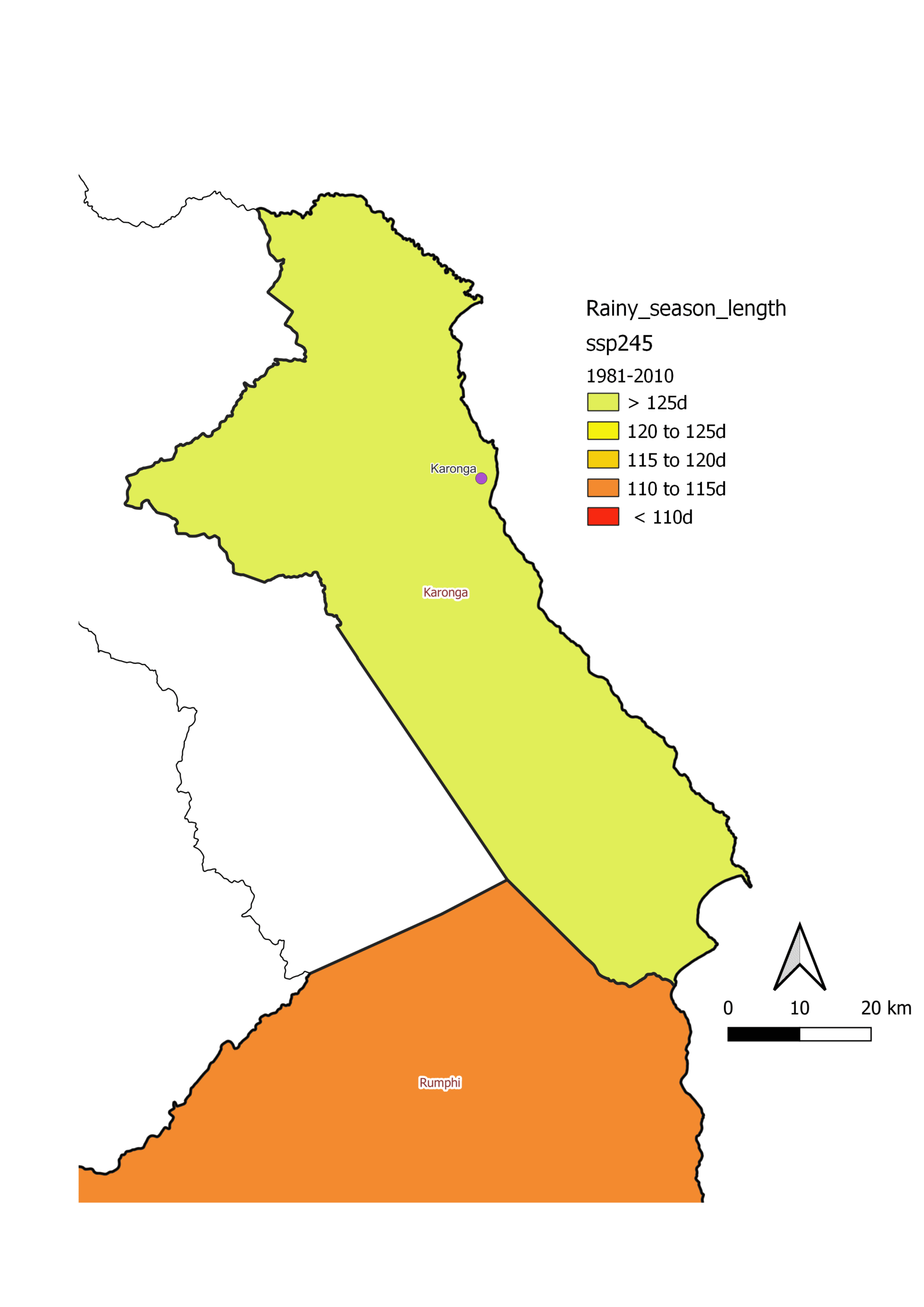
Figure 1. Duration of the rainy season recorded during the historical baseline years (1981-2010).
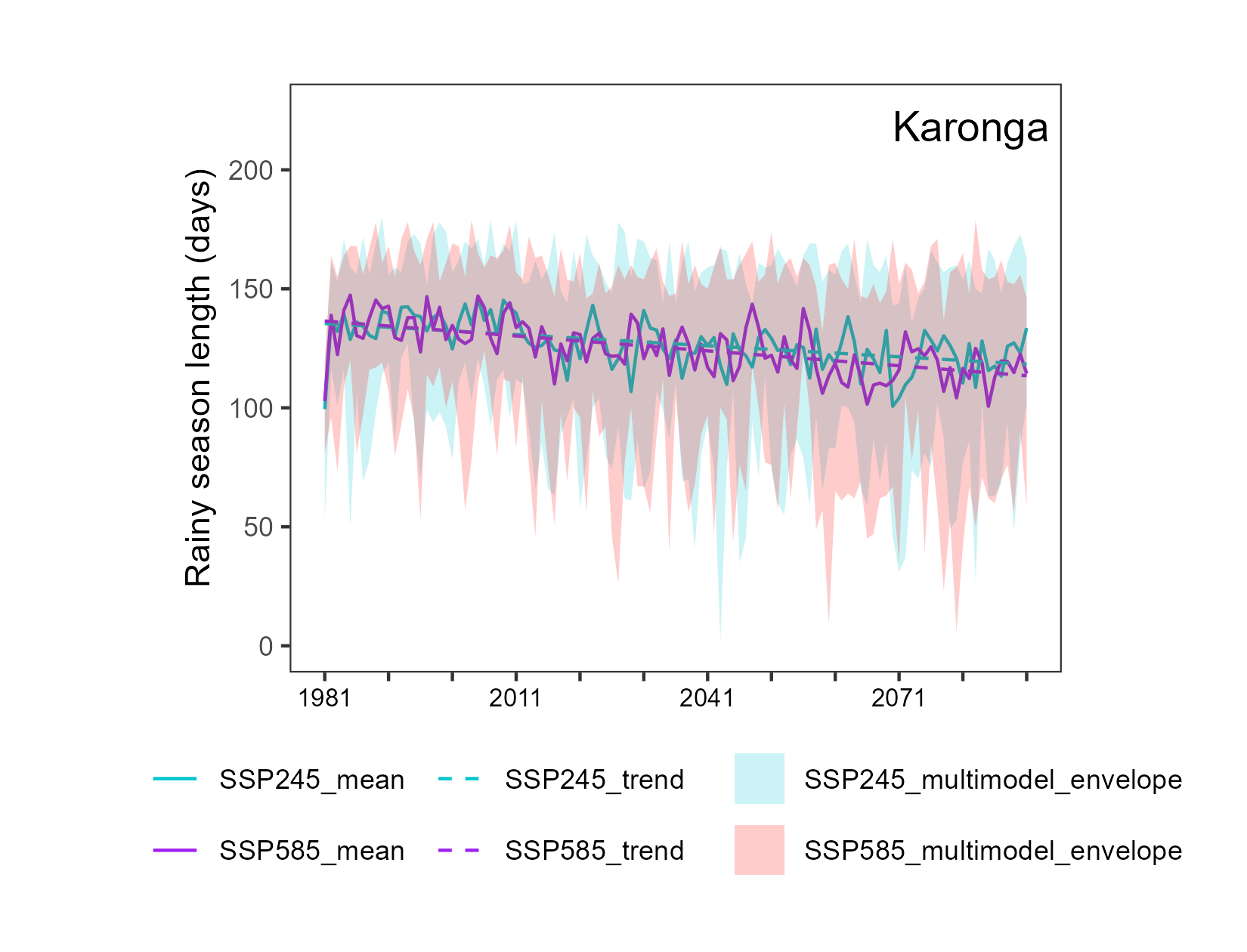
Duration of the rainy season for both SSP2-4.5(green) and SSP5-8.5(purple). The dashed lines are the linear trends of the ensemble means for SSP members.
Figure 2. Duration of the rainy season for both SSP2-4.5(green) and SSP5-8.5(purple). The dashed lines are the linear trends of the ensemble means for SSP members.
Karonga District has experienced a very long rainy season from the 1980s to the present, with an average of around 127 rainy days per year. However, projections indicate that the duration of the rainy season will decrease by the end of the 21st century under both scenarios. The table below summarises the projected length of the rainy season by the 2080s, based on two Shared Socioeconomic Pathways (SSPs): SSP2-4.5 and SSP5-8.5.  


Note: Tables represent ensemble means from climate model projections. Actual values vary across models, and results should be interpreted as approximate rather than exact. 
Current average length of rainy season per year (1981-2010):127 days
Business as usual (SSP2-4.5)Average length of rainy season per year is projected to reach:
Around 130 days by 2040
Around 122 days by 2060
Around 121 days by 2080
Tech- and fossil-fuelled boom (SSP5-8.5)Average length of rainy season per year is projected to reach:
Around 127 days by 2040
Around 113 days by 2060
Around 104 days by 2080

Region Balaka

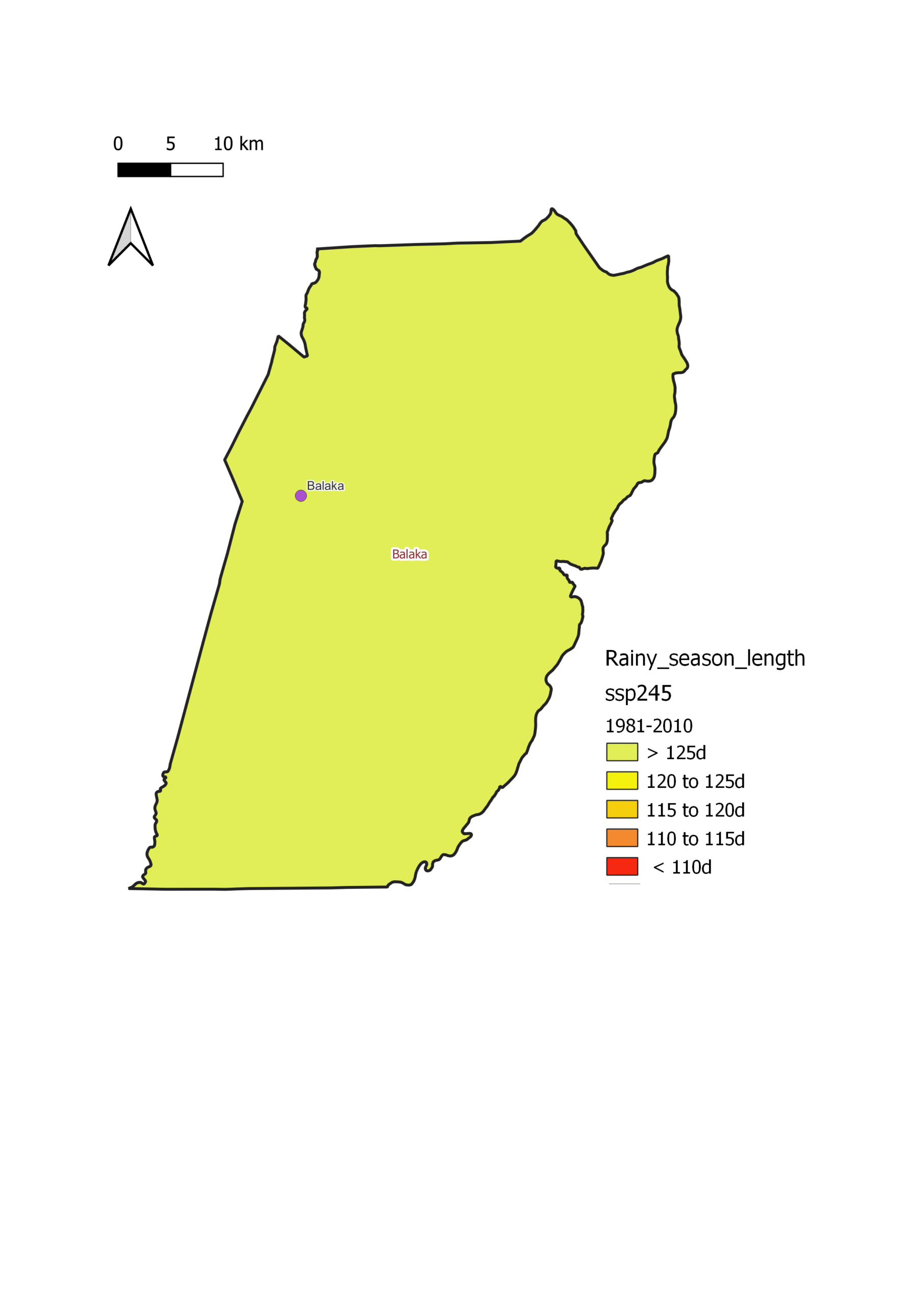
Figure 1. Duration of the rainy season recorded during the historical baseline years (1981-2010).
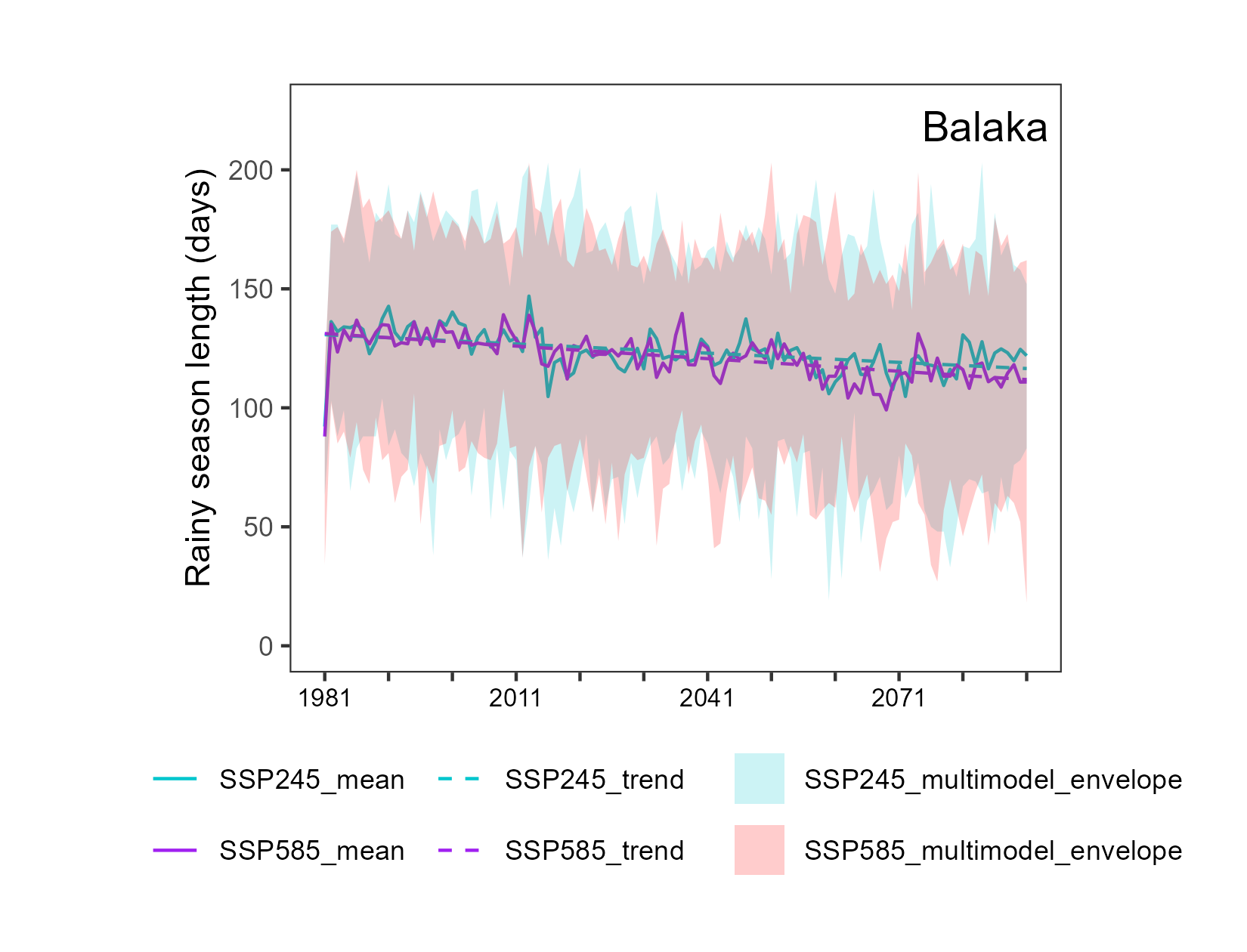
Duration of the rainy season for both SSP2-4.5(green) and SSP5-8.5(purple). The dashed lines are the linear trends of the ensemble means for SSP members
Figure 2. Duration of the rainy season for both SSP2-4.5(green) and SSP5-8.5(purple). The dashed lines are the linear trends of the ensemble means for SSP members
Karonga District has experienced a very long rainy season from the 1980s to the present, with an average of around 127 rainy days per year. However, projections indicate that the duration of the rainy season will decrease by the end of the 21st century under both scenarios. The table below summarises the projected length of the rainy season by the 2080s, based on two Shared Socioeconomic Pathways (SSPs): SSP2-4.5 and SSP5-8.5. 


Note: Tables represent ensemble means from climate model projections. Actual values vary across models, and results should be interpreted as approximate rather than exact. 
Current average length of rainy season per year (1981-2010): 125 days
Business as usual (SSP2-4.5)Average duration of rainy season per year is projected to reach:
Around 129 days by 2040
Around 106 days by 2060
Around 112 days by 2080
Tech- and fossil-fuelled boom (SSP5-8.5)Average duration of rainy season per year is projected to reach:
Around 127 days by 2040
Around 113 days by 2060
Around 118 days by 2080

Region Kasungu

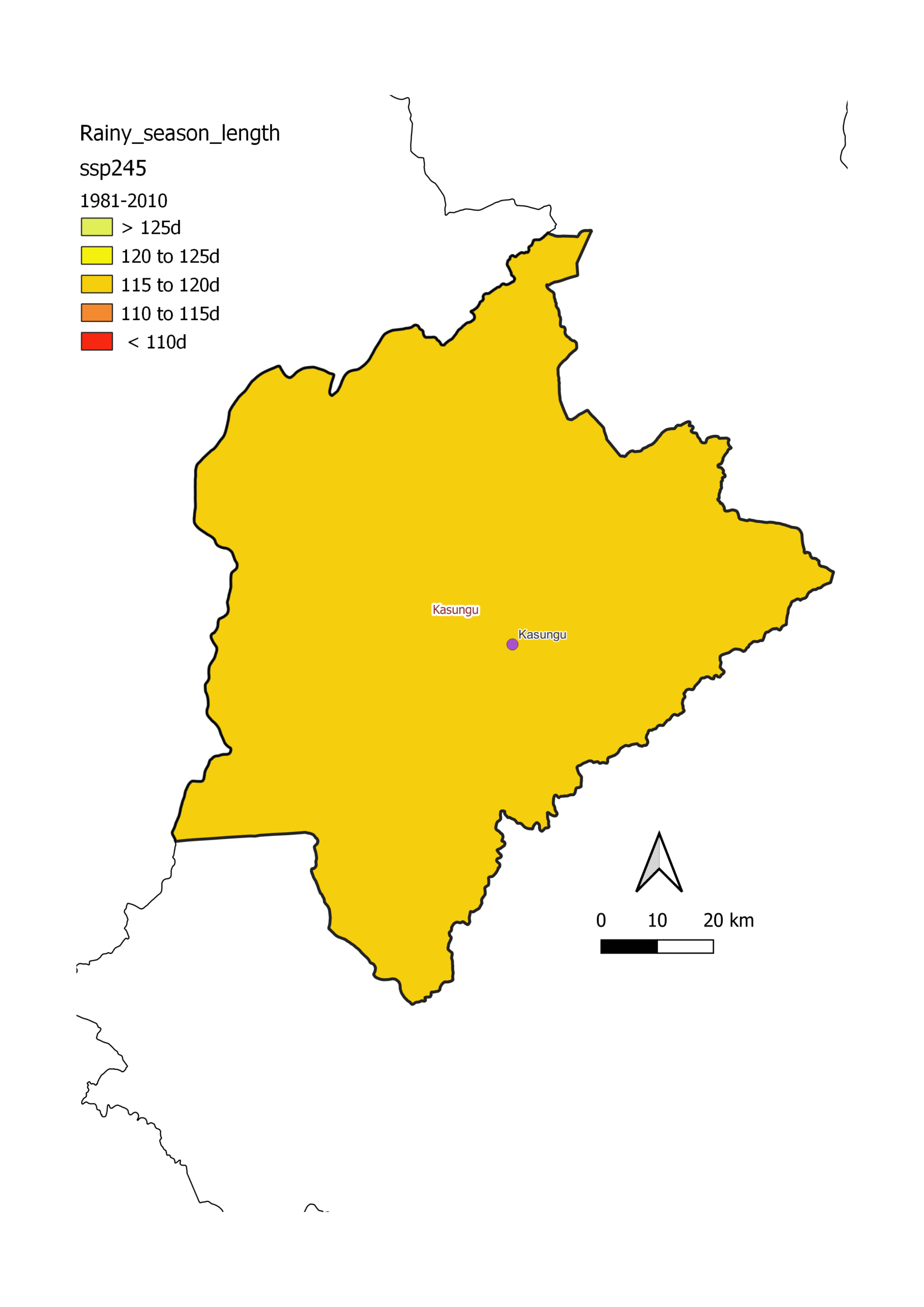
Figure 1. Duration of the rainy season recorded during the historical baseline years (1981-2010).
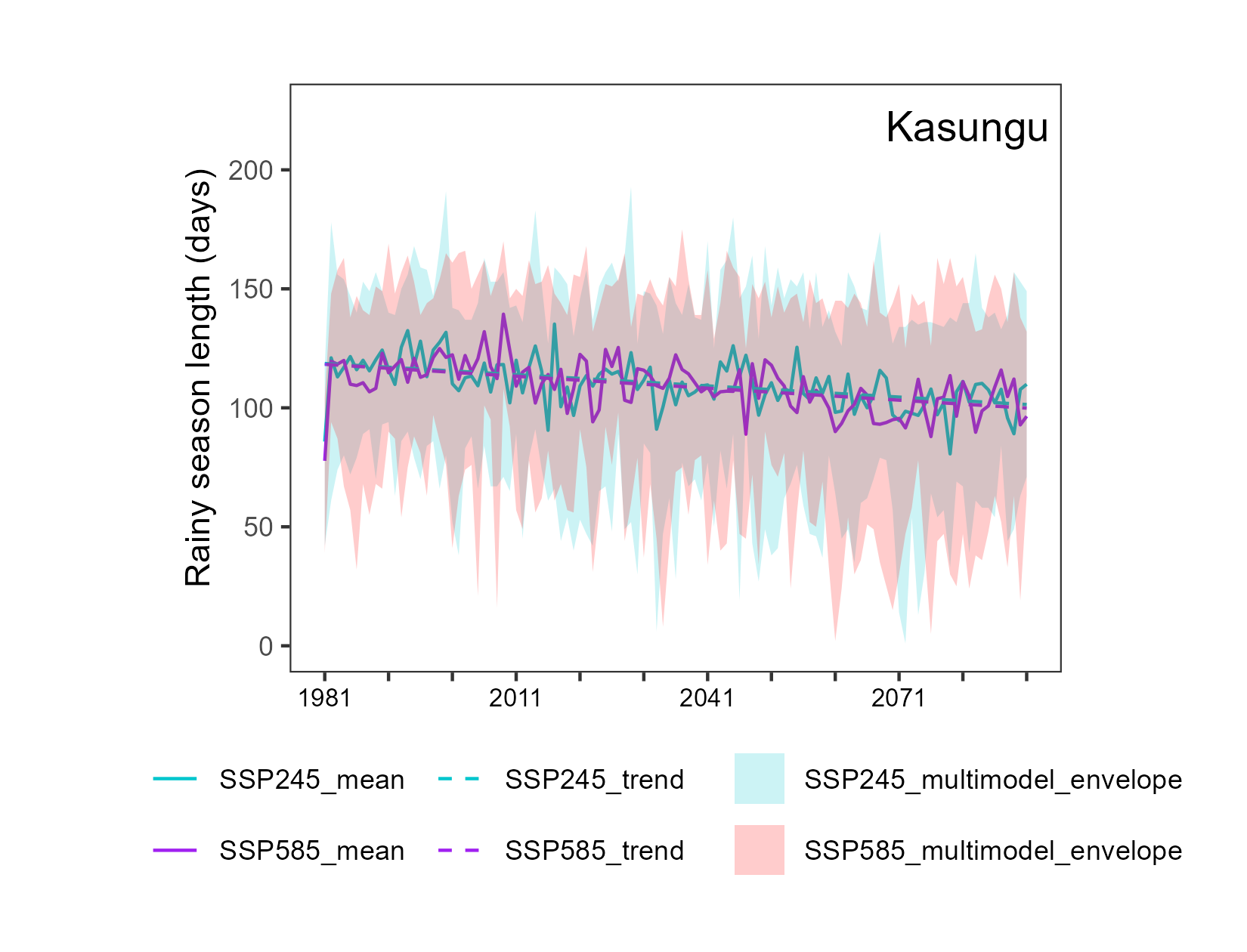
Duration of the rainy season for both SSP2-4.5(green) and SSP5-8.5(purple). The dashed lines are the linear trends of the ensemble means for SSP members.
Figure 2. Duration of the rainy season for both SSP2-4.5(green) and SSP5-8.5(purple). The dashed lines are the linear trends of the ensemble means for SSP members.
Kasungu District has experienced a moderately long rainy season from the 1980s to the present, with an average of around 116 rainy days per year. However, projections indicate that the duration of the rainy season will decrease by the end of the 21st century under both scenarios. The table below summarises the projected length of the rainy season by the 2080s, based on two Shared Socioeconomic Pathways (SSPs): SSP2-4.5 and SSP5-8.5.  


Note: Tables represent ensemble means from climate model projections. Actual values vary across models, and results should be interpreted as approximate rather than exact. 
Current average length of rainy season per year (1981-2010):116 days
Business as usual (SSP2-4.5)Average duration of rainy season per year is projected to reach:
Around 109 days by 2040
Around 113 days by 2060
Around 107 days by 2080
Tech- and fossil-fuelled boom (SSP5-8.5)Average duration of rainy season per year is projected to reach:
Around 107 days by 2040
Around 100 days by 2060
Around 96 days by 2080

Region Salima

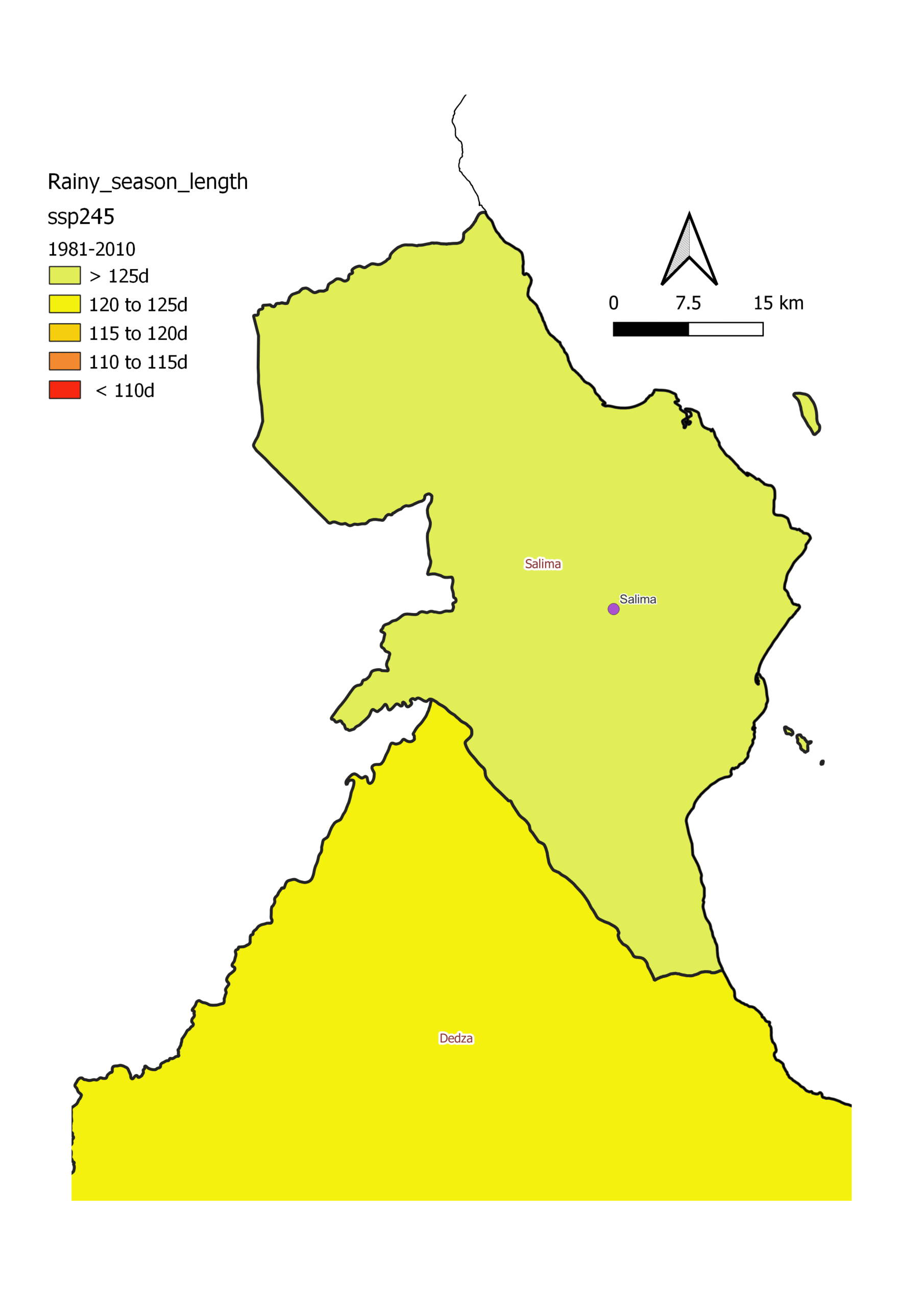
Figure 1. Duration of the rainy season recorded during the historical baseline years (1981-2010).
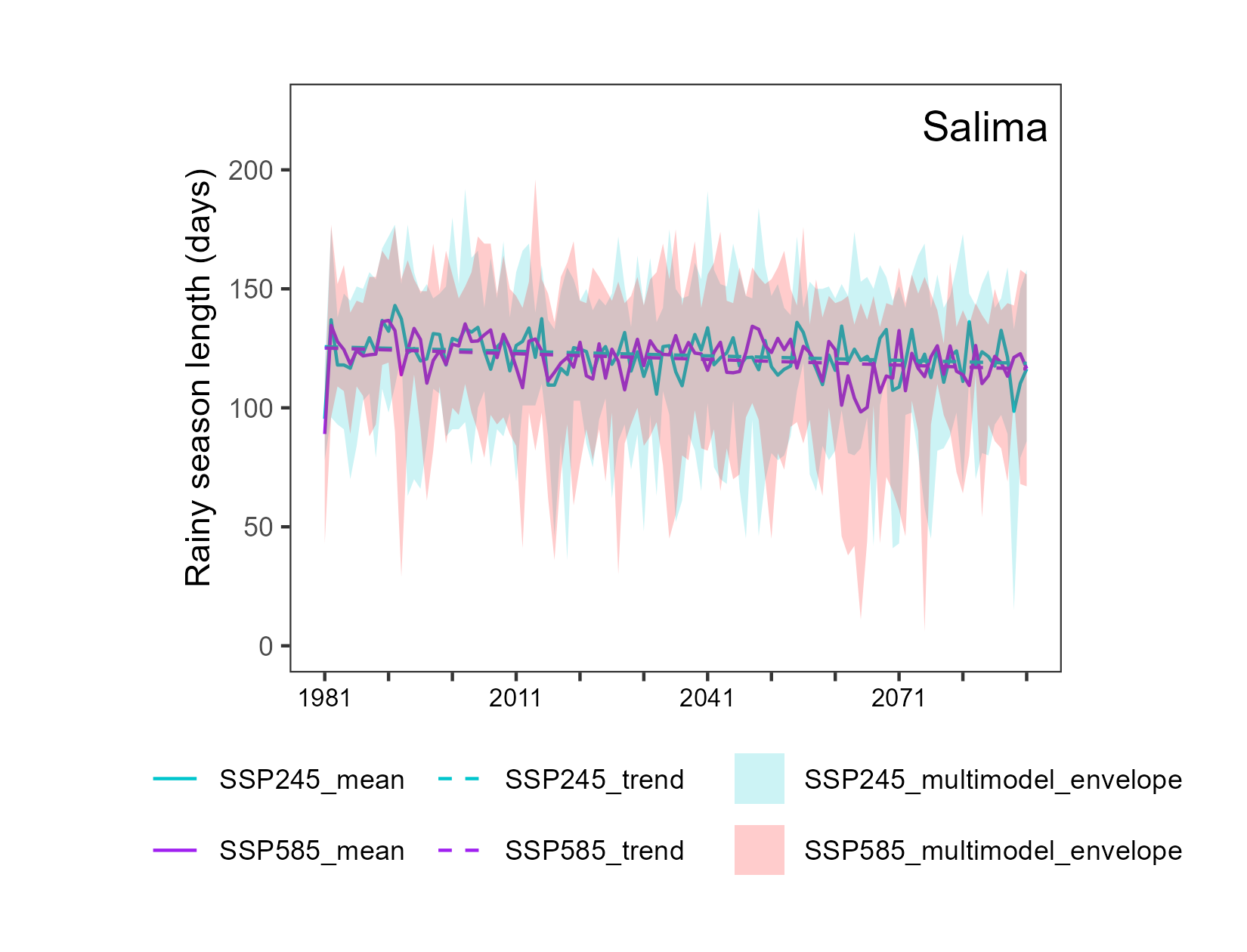
Figure 2. Duration of the rainy season for both SSP2-4.5(green) and SSP5-8.5 (purple). The dashed lines are the linear trends of the ensemble means for SSP members.
Salima District has experienced a long rainy season from the 1980s to the present, with an average of around 126 rainy days per year. However, projections indicate that the duration of the rainy season will decrease by the end of the 21st century under both scenarios. The table below summarises the projected length of the rainy season by the 2080s, based on two Shared Socioeconomic Pathways (SSPs): SSP2-4.5 and SSP5-8.5. 

 
Note: Tables represent ensemble means from climate model projections. Actual values vary across models, and results should be interpreted as approximate rather than exact. 
Current average length of rainy season per year (1981-2010): 126 days
Business as usual (SSP2-4.5)Average duration of rainy season per year is projected to reach:
Around 124 days by 2040
Around 122 days by 2060
Around 124 days by 2080
Tech- and fossil-fuelled boom (SSP5-8.5)Average duration of rainy season per year is projected to reach:
Around 123 days by 2040
Around 128 days by 2060
Around 115 days by 2080

Learn more