Why climate risk matters for Malawi
Malawi is vulnerable to climate variability and change due to its reliance on rain-fed agriculture, high population density, and limited adaptive capacity. The country’s economy and food systems are particularly sensitive to changes in rainfall patterns and extreme weather events such as heavy storms, droughts and heatwaves. Climate change is intensifying the frequency and severity of natural hazards, some of which we discuss below. These worsen existing challenges such as food insecurity, poverty, and environmental degradation. Understanding the key climate risks is critical for planning resilience and adaptation strategies.
The main climate hazards
Heatwaves & rising temperatures
Average temperatures in Malawi are increasing, with more frequent and intense heatwaves. Rising temperatures increase evapotranspiration, worsen drought conditions and reduce water availability.
Heat stress harms human health, labour productivity and crop yields, key crops such as maize are especially sensitive to temperature increases during critical growth stages.
Droughts
Drought is one of the most serious and costly climate hazards in Malawi, particularly in the southern and central regions. Low and unpredictable rainfall and prolonged dry spells are becoming more frequent.
Drought reduces water availability for households, irrigation and livestock, leading to crop failure, food insecurity and reduced household resilience.
Explore drought risk
Floods
Flooding is another major hazard, often occurring during the rainy season due to intense rainfall and river overflow, particularly in the Shire River basin.
Floods damage homes, infrastructure and farmland. They frequently displace communities and contribute to outbreaks of waterborne diseases such as cholera.
Explore flood risk
Landslides
Landslides occur primarily in highland and mountainous areas following heavy rainfall. Deforestation and land degradation have increased slope instability, making certain regions more susceptible.
They can destroy homes, roads and agricultural land, and pose serious risks to life, often linked to cyclones and intense rainfall events.
Soil loss & erosion
Heavy rainfall, flooding and land degradation contribute to soil erosion, reducing soil fertility and undermining agricultural productivity.
Soil loss weakens ecosystem stability and increases vulnerability for rural communities whose livelihoods depend directly on rainfed agriculture.
Explore soil loss
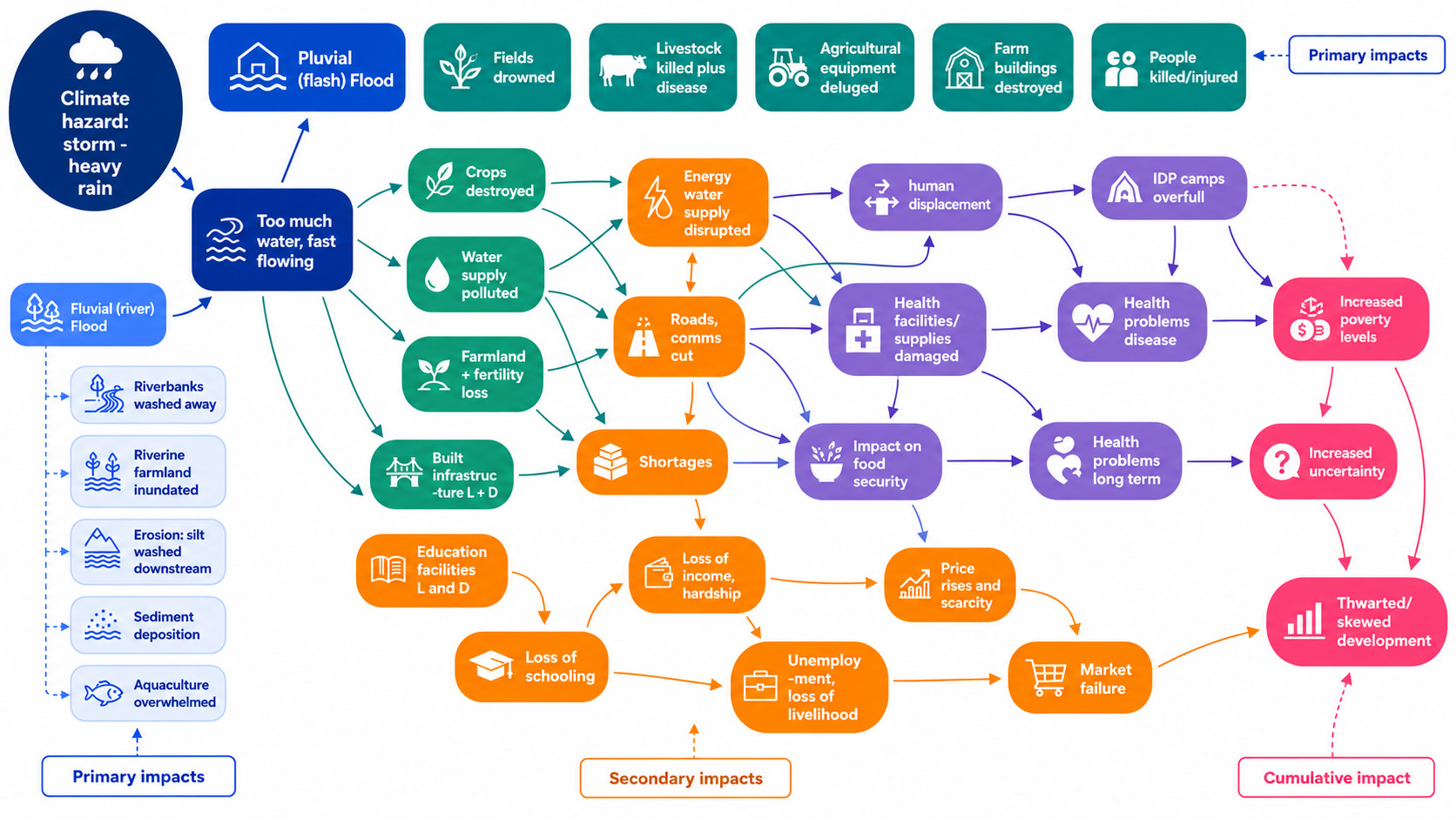
Cascading impacts of heavy rains
The diagram below traces the cascading impacts that heavy rains have in Malawi, showing how one episode of heavy rainfall connects to further impacts across the country.